Thrilled to have my piece on Cuba included in the new Bradt Travel Guide. You can get a copy right here

Troutie McFish Tales
Wednesday, 5 April 2017
Bradt Travel Guides - Roam Alone
Thrilled to have my piece on Cuba included in the new Bradt Travel Guide. You can get a copy right here

My story is up on Jellyfish Review
Blood Red
He opened the window, hung his coat behind the door, and examined the smooth texture of the ball for a moment, testing the weight of it in his hand.
There was no view from his tiny rear office, nothing to distract him from the routine of the day. It was the first hot morning of the summer, and he flicked the wall switch for the overhead fan. It creaked into action for a single revolution, sighed, and stopped. Walter threw the ball at the ceiling in frustration. It glanced off the fan blade and flew unnoticed out of the window, hitting the visor of a passing motorcycle courier.
A moment later, Walter heard the raw screech of brakes. He peered out over the ledge, but couldn’t see to the end of the street. He shook his head and sat back down. After the wail of the ambulance siren had faded into the distance, Walter went to the kitchen to make his first coffee of the day. As he passed the sales office he heard shrieking, and then Amy Potter burst into the corridor and made for the kitchen ahead of him. As he walked in she was running the cold tap, a glass tumbler in her hand.
‘Mr Patchett, have you the heard the dreadful news? Chloe Broadbent has been in an accident. Just now, on the way back from the bank. A motorcycle courier swerved into a car, and the car mounted the kerb and knocked her down. It’s terrible!’
Her words tumbled out in a breathless rush, and Walter patted her on the arm. He wasn’t very good in these situations, and now Amy was threatening tears.
‘I’m sure she’ll be fine.’
‘No, Mr Patchett, you don’t understand. Mr Dawes in purchasing saw it happen. He says she’s dead!’
Walter flapped his arms uselessly for a moment, and then took the glass from Amy’s shaking hand. The volume of the other girls’ voices rose and fell as the sales office door opened and closed.
‘You go back in the office and calm things down, I’ll make everyone a cup of sweet tea.’
He tried to remember which of the girls was Chloe Broadbent. Was she the little blonde one? Or was that Lydia? No, he was sure Chloe was the blonde one. A nice girl. It was so frightening the way everything could change in a single moment, and all because of some fool’s reckless driving.
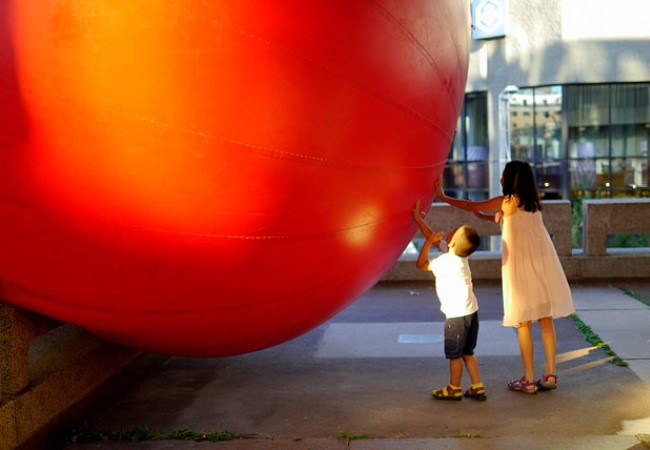
Walter stopped at the kitchen window, kettle in hand, and glimpsed a small red ball coming to rest against the kerb below. Blood red. He turned to see a policewoman in the corridor, and gently pushed the door closed with his foot.
(Previous “Kill People” story: Roscoe by Christopher Murphy)
Feel like submitting? Check out our submission guidelines
Image by art_inthecity (Kurt Perschke)
Wednesday, 8 March 2017
The Baby Shoes Project
The story goes that Hemingway's famous six word story:
For Sale: Baby shoes, never worn
was written to win a bet. The Baby Shoes Project took that story as its theme, and this fabulous anthology of flash fiction is the result.
The anthology is now available to buy from Amazon here

I'm really proud to have two stories in this lovely book, which is being sold to raise funds for the children's charity Make-A-Wish Foundation.
For Sale: Baby shoes, never worn
was written to win a bet. The Baby Shoes Project took that story as its theme, and this fabulous anthology of flash fiction is the result.
The anthology is now available to buy from Amazon here

I'm really proud to have two stories in this lovely book, which is being sold to raise funds for the children's charity Make-A-Wish Foundation.
Thursday, 5 January 2017
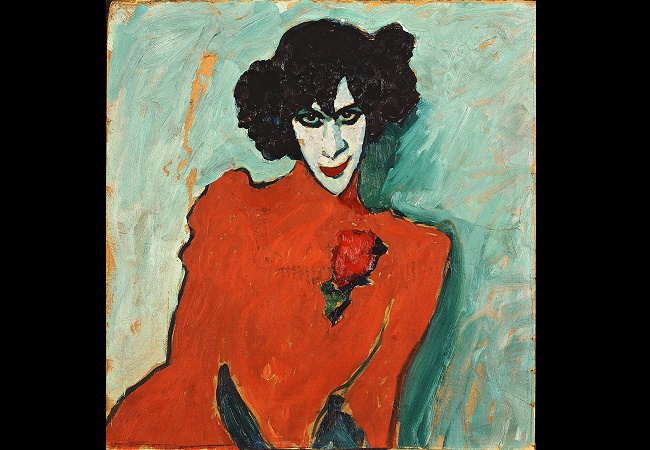
Jellyfish Review “Kill People” Special Issue
Art by Alexej von Jawlensky (Is it just us, or does she have a murderous glint in her eye?)
Delighted that my story, Blood Red, will appear in this issue!
From the Jellyfish Review website:
https://jellyfishreview.wordpress.com
The fourth Jellyfish Review special issue will run between mid-March and mid-April on the theme “Kill People”.
Some of the greatest short stories ever written have had people knocking each other dead. Flannery O’Connor’s “A Good Man Is Hard to Find”. Tobias Wolff’s “Bullet in the Brain”.
Here are some of our favourite contemporary takes on the subject – coming at killing from entirely different, entirely wonderful angles.
Megan Giddings at The Offfing: The Alive Sister
Kim Chinquee at Noo Weekly: Please, Just Come to the Door
Emily Mitchell at Guernica: Fat Man’s Last Meal (scroll down)
Sequoia Nagamatsu at Copper Nickel: The Rest of the Way
You can read more here
Monday, 31 October 2016
Ink Tears Flash Fiction Prize 2016
My story, The Mountain Cherry Tree Corps, was Highly Commended in this year's Ink Tears Prize.

Friday, 28 October 2016
Off the Beaten Track
Delighted to be Highly Commended in the Senior Travel Expert Travel Writing Competition!

Copyright M Huggins 2007
The Off the Beaten Track Writing Competition closed on September 30th. Over 300 entries were received with about a quarter of them being fictional. Most of the entries were of publishable standard and it was clear that a lot of time and thought had been put into meeting the competition criteria. Our thanks to everyone who entered.
Ten Runners-up will each receive a £10 firstwriter.comsubscription voucher.The high standard of entries meant that judging was very difficult. After much consideration, the Judging Panel, chaired by our Writing Competition Editor, Anne Esser, chose two entries as Joint Winners, one factual the other fictional. Each entrant will receive half of the £100competition prize.
In recognition of the high number of good quality entries, the Judging Panel decided that ten additional entries that were short-listed, but not finally chosen as winners or runners-up, should be listed as Highly Commended.
The winning and runner-up entries will be published on the STE website over the next few weeks.
Joint Winners
- The Kingdom of the Cats – A Warm Welcome at the Edge of the World by Andrea Wotherspoon
- Ystalyfera by Bridget Blankley (Fictional)
Runners-up
- Anyone for Tea? by Barbara Bond
- Bobbinfield Blast Off by Carolyn Ward (Fictional)
- Cowboys, Indians and Hot Water by Deryn van der Tang
- Exploring History – Chernobyl Exclusion Zone by Philippa Holloway
- Just My Cup of Tea by Anne Leuchars
- Not Just Soap by Caroline Boobis
- Out of Place by Simon Whaley
- The Grand Experience by Andrew Abbott (Fictional)
- The Park in the Sky by Ellen Evers
- The Road to Nowhere by Janet Traill
Highly Commended
- Bray: Ireland’s Forgotten ‘Brighton’ by Eimear Dodd
- Delicious Surprise by Mandy Huggins
- Figeac – A Fortuitous Interlude by Amanda Lumley
- Finding Paradise in Lake Atitlan, Guatemala by Lisa Montgomery
- Jaffna by Clare Foxon
- Journeying Back Into the Blue Ridge by Judy Mitchell
- Life’s a Beach by Laura Collins
- Nootka Island Trek by Janet Rogers
- South of the Celtic Sea by Chelsea Steinauer-Scudder (Fictional)
- Why Don’t More Come to Morecambe? by Helen Rhodes
Wednesday, 5 October 2016
Dragonfly Tea / Henley Literary Festival Short Story Competition
So excited to be the runner-up in this year's competition!
Announcing our 2016 Short Story Winners!

The Dragonfly Tea Short Story competition has now come to a close. We received an outstanding number of entries, over 1000 across the adults and children's categories, and we were incredibly impressed with the quality and high standard of stories that were submitted this year.
Every story was read and reviewed and after a tough judging process, we are now thrilled to announce the winners of this year's Short Story Competition 2016:
Main Competition Winners:
1st Prize
Jo Tiddy
Asase Ya
Jo Tiddy
Asase Ya
2nd Prize
Mandy Huggins
Michael Secker's Last Day
3rd Prize
Hannah Hastilow
An Untitled Spanish Tale
Children's Competition Winners:
Ages 12-15:
WinnerSophie Koziell-Pipe
The Observer
Highly Commended
Mia Myers
Heart Wrenched
Highly Commended
Sachleen Soor
We're All Mad Here
Ages 8-11:
Oscar Heelan
Pie in the W-Eye
Highly Commended
Ben Barnard
Liko and the Mythical Phoenix
Highly Commended
Charlie Martin
The Mary Celeste
Ages 4-7:
Lachlan Hudson-Cubitt
The Curse of the Sacred Maze
Highly Commended
Benji Rilett
When Nana Met a Goblin
Highly Commended
Bertie Wood
Attack of the One-eyed Boogei

We would like to congratulate all of the winners and thank everyone for entering this year. We hope our competition has inspired budding writers of all ages to put pen to paper and write a tale of discovery or adventure!
Also, this year we have printed all shortlisted stories into beautiful booklets. If you would like to read our shortlisted stories, please send an email to hello@dragonflytea.com and we would be delighted to send you a copy.

Saturday, 3 September 2016
I Must Be Off Travel Award
Thrilled that 'A Thousand Cranes', my entry into this year's I Must Be Off Travel Writing Competition, has reached the final 18. The winner and runner-up will be announced in the next couple of weeks. As well as the prizes awarded by the judge, Paola Fornari, there is an additional readers' prize. If you'd like to leave a comment on the I Must Be Off website, you can find it here
A Thousand Cranes by Mandy Huggins

We
left the station and headed towards the river, and as we reached the A-bomb
Dome a hesitant sun appeared above the skeletal roof, showcasing stark metal
against blue skies. The building partly survived the 1945 atomic blast because
of its position directly beneath the epicentre, and now the poignant ruin is
frozen in time amidst high rise blocks. We stared in silence, listening to the
chime of the peace bell across the water.
At
the park we were greeted by a flock of origami cranes. The strings of birds
flew across the path in a gust of brisk autumnal wind, landing at our feet in a
slalom of colour. I reached down and pocketed one that had broken free – tiny,
bright and fragile, like an iridescent hummingbird.
A
group of schoolboys snatched up the strings and solemnly placed them around the
Children’s Memorial, before politely cornering visitors to help with their
school assignments. A serious-looking boy with a glossy fringe greeted us
in English before holding up his question, carefully handwritten in neat, rounded
letters. He wanted us to suggest what the world could do to achieve lasting
peace. Thrown by his unwavering gaze, I scribbled a quick answer, knowing that
whatever words I offered they would not be adequate.
 In
front of us, a young girl and her mother arranged their own paper cranes around
the memorial to Sadako Sasaki. Sadako was just two years old when the atom bomb
fell, and died from leukaemia ten years later. She was attempting the challenge
of folding a thousand cranes, the number needed according to Japanese lore to
ensure that a wish comes true. Since then countless birds have been folded by
children all across Japan and sent here as a constant symbol of hope for world
peace.
In
front of us, a young girl and her mother arranged their own paper cranes around
the memorial to Sadako Sasaki. Sadako was just two years old when the atom bomb
fell, and died from leukaemia ten years later. She was attempting the challenge
of folding a thousand cranes, the number needed according to Japanese lore to
ensure that a wish comes true. Since then countless birds have been folded by
children all across Japan and sent here as a constant symbol of hope for world
peace.
I
glimpsed a man watching us as he hung his cranes alongside the others. They
were different to the birds folded from traditional origami paper; these were
crafted from some kind of information leaflet, and when I saw them I realised
it was the man from the station. As we turned towards the museum, I was aware
that he was watching us as we went inside.
As
we walked from room to room, it was the simple personal objects and haunting
snapshots that resonated the most. There was no doubt that these scattered
fragments of ordinary lives spoke the loudest about what happened on 6th August
1945. There was a watch that had stopped at the moment the bomb fell, a twisted
tricycle, the tattered remnants of children’s clothes, a wall streaked with
black rain, a charred lunch tin, a bottle that had melted in the intense heat.
And the dark shadow of a man, burnt onto the steps of the bank, where he had
been sitting, waiting for it to open.
When
we stepped back outside, we blinked in the bright sunlight. The man was stood
at the door, bowing to departing visitors as he handed out his leaflets. As
soon as he saw us, he indicated a bench nearby and asked us to sit with him,
finally introducing himself. Hitoshi was a local school English teacher, and a
man with his own story to tell about Hiroshima; one that he wanted as many
people as possible to hear. He explained that his mother, Mitsuko, was
hibakusha -- a survivor of the bomb -- and consequently she suffered
discrimination throughout her life, often finding it difficult to get
work. A small child when the bomb fell,
she lost her father and brother, and her mother and aunt suffered from severe
radiation sickness and subsequent illnesses. After the war, misunderstanding
was widespread, and survivors were thought to be bad luck and even contagious.
Hitoshi recalled the hostility from neighbours and the consequent need for them
to move home several times. He remembered his childhood as a time of
insecurity. He told us that he handed out leaflets to Japanese visitors and
students in the hope they would understand their own history better through a personal
story.
As
we said goodbye to him and left the park, we once again passed by the tangled
strings of paper cranes around Sadako’s memorial. My hand closed around the
tiny green bird in my pocket, and I paused for a moment to place my own hope
for peace alongside the others.
______________________________________________
Mandy Huggins’s travel writing and short fiction has appeared in anthologies, newspapers and magazines. She
has won numerous writing competitions and been shortlisted in many
others, including those run by Bare Fiction, Fish, Ink Tears, English
Pen, and Bradt Travel Guides. She won the BGTW New Travel Writer Award
2014.
Judge's Comment: Delicately folded paper cranes: what could contrast more starkly with the horror of Hiroshima? A bag of leaflets scattered on the ground brings our writer into contact with Hitoshi, who relates the story of how his family was affected by the bomb. His message is one of peace, echoed by the writer in the final sentence. '..I paused for a moment to place my own hope for peace alongside the others.'
Judge's Comment: Delicately folded paper cranes: what could contrast more starkly with the horror of Hiroshima? A bag of leaflets scattered on the ground brings our writer into contact with Hitoshi, who relates the story of how his family was affected by the bomb. His message is one of peace, echoed by the writer in the final sentence. '..I paused for a moment to place my own hope for peace alongside the others.'
COMMENTS:
- This is one of my favourite entries so far.Anonymous


Friday, 8 July 2016
CINNAMON SHORT STORY PRIZE

CINNAMON PRESS SHORT STORY PRIZE
Very pleased to report that my entry into this year's Cinnamon Press Short Story Prize was commended. The winning stories can be read by clicking on the link above.
Sunday, 26 June 2016
FlashFlood: Flight Path by Mandy Huggins
FlashFlood: Flight Path by Mandy Huggins: Beyond the pier I watch two men as they repaint the end wall of the new apartment block a startling orange. ‘It’s the geese,’ explai...
Saturday, 18 June 2016
The Last of Michiko


Every evening Hitoshi
kneels on a blue cushion in the doorway that leads out to the garden.
He leaves the shoji screens open regardless of the weather, and stays
there until long after the sun has set. His heart knows that Michiko
will never return, but his stubborn head finds reasons to postpone
acceptance of the fact.
The wind chimes jingle softly through the house, as gentle as her voice, and in the sudden breeze they mimic her laugh. Hitoshi presses his face into a pink kimono, inhaling her faint scent. At his side stands a jar of her homemade adzuki bean paste, as sweet and red as her lips. He has rationed it carefully, but now this final jar is almost empty.
The day’s post is propped up against the screen, and Hitoshi reaches for the bills and a letter from his daughter. She writes each week and always asks him to go and stay. Sometimes he thinks he will, but the trip to Tokyo seems like such a long journey now, and the city blinds him. There are no distances; everything is too densely packed, too close to see. And what about Michiko? He couldn’t risk her returning in his absence.
His son lives nearer, but when Hitoshi sees the car pull up he stays out of sight and doesn’t answer the door. He is saving them from the words that neither can bear to say. His son was the last to see Michiko; he watched the dark water snatch her away as though she were a brittle twig. When Hitoshi imagines it he pictures her hair floating upwards like the darkest seaweed, her skin so pale it appears as blue as the sea.
And though he has tried not to, he blames his son for failing to save her.
Some evenings Hitoshi thinks he hears a faint knocking, but when he goes outside the narrow street is always empty. He peers into the darkness for a moment; remembering the clack of wooden geta on the cobbles, glimpsing the soft light of the lantern outside the noodle shop. He imagines the warmth inside; the kind face of Koko as she pours the sake, and his friend, Wada, sitting at the counter waiting to mull over the old days. But Hitoshi always goes back inside and sits alone again in the dark.
Tonight there is no knocking, but just after seven o’clock he hears the doorbell. When he opens the screen, his neighbour, the young widow Emiko, stands beneath the light cradling a jar in both hands.
‘I found this in the cupboard, Hitoshi-san, the last of Michiko’s bean paste.’
As he takes the jar, Hitoshi stumbles under the weight of its significance. He looks up at Emiko as she backs away, and when their eyes meet she pauses. He bows, and gestures her inside, apologising for his rudeness. She steps past him, her kimono sweeping the tatami like a new broom, and the wind chimes fall silent.
Mandy Huggins
The Last of Michiko was Highly Commended in the Bare Fiction Prize for Flash Fiction 2015, as chosen by Richard Skinner.
The wind chimes jingle softly through the house, as gentle as her voice, and in the sudden breeze they mimic her laugh. Hitoshi presses his face into a pink kimono, inhaling her faint scent. At his side stands a jar of her homemade adzuki bean paste, as sweet and red as her lips. He has rationed it carefully, but now this final jar is almost empty.
The day’s post is propped up against the screen, and Hitoshi reaches for the bills and a letter from his daughter. She writes each week and always asks him to go and stay. Sometimes he thinks he will, but the trip to Tokyo seems like such a long journey now, and the city blinds him. There are no distances; everything is too densely packed, too close to see. And what about Michiko? He couldn’t risk her returning in his absence.
His son lives nearer, but when Hitoshi sees the car pull up he stays out of sight and doesn’t answer the door. He is saving them from the words that neither can bear to say. His son was the last to see Michiko; he watched the dark water snatch her away as though she were a brittle twig. When Hitoshi imagines it he pictures her hair floating upwards like the darkest seaweed, her skin so pale it appears as blue as the sea.
And though he has tried not to, he blames his son for failing to save her.
Some evenings Hitoshi thinks he hears a faint knocking, but when he goes outside the narrow street is always empty. He peers into the darkness for a moment; remembering the clack of wooden geta on the cobbles, glimpsing the soft light of the lantern outside the noodle shop. He imagines the warmth inside; the kind face of Koko as she pours the sake, and his friend, Wada, sitting at the counter waiting to mull over the old days. But Hitoshi always goes back inside and sits alone again in the dark.
Tonight there is no knocking, but just after seven o’clock he hears the doorbell. When he opens the screen, his neighbour, the young widow Emiko, stands beneath the light cradling a jar in both hands.
‘I found this in the cupboard, Hitoshi-san, the last of Michiko’s bean paste.’
As he takes the jar, Hitoshi stumbles under the weight of its significance. He looks up at Emiko as she backs away, and when their eyes meet she pauses. He bows, and gestures her inside, apologising for his rudeness. She steps past him, her kimono sweeping the tatami like a new broom, and the wind chimes fall silent.
Mandy Huggins
The Last of Michiko was Highly Commended in the Bare Fiction Prize for Flash Fiction 2015, as chosen by Richard Skinner.
Subscribe to:
Posts (Atom)
BOOK REVIEW - The Wine-Dark Sea by Victoria Hislop
WHAT THE PUBLISHER SAYS: Beloved, bestselling author Victoria Hislop explores the turbulence of the post-war era in Greece in this unfor...

-
 I'm thrilled to welcome Allison Symes to Troutie McFish Tales today, to tell us more about her love of writing and to pass on some...
 -
So excited to be the runner-up in this year's competition! Announcing our 2016 Short Story W...
