

Troutie McFish Tales
Thursday, 20 June 2019
The Cotton Grass Appreciation Society
I'm delighted to have a poem in this anthology alongside Simon Armitage, Alison Lock and many other great poets. The Cotton Grass Appreciation Society will be launched in September as part of the Marsden Walking Festival.

Friday, 14 June 2019
National Flash Fiction Day

It's National Flash Fiction Day tomorrow, and I've shared my thoughts on reading and writing flash with Cath Holland as part of Wrapped Up In Books on the Getintothis website, along with many other writers such as Sarah Hilary, Sandra Arnold and F J Morris.
You can read the full article here
AMANDA HUGGINS
‘Flash fiction is perfectly suited to the pace of the twenty-first century, and I love the way you can dip in and out, returning to certain stories time after time as you would with a poetry collection.
I know some readers say they don’t read shorts because they can’t lose themselves in the story the way they can in a novel, yet a cracking flash will leave you with something to think about for days after you’ve read it. Writing flash is both a challenge and a joy.
It’s an opportunity to try and create something as perfect as it can possibly be. When you only have a few hundred words, your language needs to be specific, concise, sparing, lean. When you impose restrictions it can often result in something surprising. I have read flash fiction that has made me cry in the space of two minutes, and stories that have made me hold my breath until I reached the end.
In flash pieces, what isn’t said is as important as what is, and I have a favourite Hemingway quote that sums it up perfectly: “If a writer of prose knows enough about what he is writing about, he may omit things … and the reader … will have a feeling of those things as strongly as though the writer had stated them.”’ – Amanda Huggins, Costa Short Story Award 2018 -3rd Prize for Red; author of Separated From the Sea-Special Mention, Saboteur Awards 2019. New collection, Scratched Enamel Heart, Spring 2020.
Tuesday, 28 May 2019
Guest Post - Gail Aldwin - Writing & Running
Gail Aldwin's new novel, The String Games, has just been launched by Victorina Press, and I'm pleased to welcome Gail back to my blog to talk about the connection between running and the creative process.

'When four-year-old Josh is abducted and murdered during a family holiday in France, Nim, aged ten, becomes an only child. To cope with the tragedy, Nim reinvents herself but continues to carry a burden of unresolved grief. As an adult she returns to France determined to find out more about the circumstances of Josh’s death. How will she deal with this new information and what are the implications for her future?'
'Gail Aldwin’s The String Games takes hold of the reader and the juncture of the head and the heart and simply does not let go. With courage and tenderness, and an unblinking eye, Gail Aldwin explores the ways in which the loss of a child explodes a family. Treat yourself and read this one.' Jacquelyn Mitchard, bestselling author of The Deep End of the Ocean
And this is what the book bloggers have been saying so far:
'A story with an astute and lucid understanding of what it means to be a female growing up in a world of adversity and loss.' Linda Hill, Linda’s Book Bag
'The author writes really well and the attention to detail and the authentic feel to the narrative make this a compelling and thought provoking read.' Jo Barton, Jaffa Reads Too
'It’s ultimately a story of hope and forgiveness, fresh starts and new beginnings: it’s quite beautifully written, and I enjoyed it very much.' Anne Williams, Being Anne
'You you can tell from the start it’s going to be something special.' Jennifer Rainbow, Bookworm Jen
'A stunning piece of literature that is devastating and truly heartbreaking, with hope all rolled into one!' Laura Turner, PageTurnersNook
And this is what the book bloggers have been saying so far:
'A story with an astute and lucid understanding of what it means to be a female growing up in a world of adversity and loss.' Linda Hill, Linda’s Book Bag
'The author writes really well and the attention to detail and the authentic feel to the narrative make this a compelling and thought provoking read.' Jo Barton, Jaffa Reads Too
'It’s ultimately a story of hope and forgiveness, fresh starts and new beginnings: it’s quite beautifully written, and I enjoyed it very much.' Anne Williams, Being Anne
'You you can tell from the start it’s going to be something special.' Jennifer Rainbow, Bookworm Jen
'A stunning piece of literature that is devastating and truly heartbreaking, with hope all rolled into one!' Laura Turner, PageTurnersNook
WRITING & RUNNING
by Gail Aldwin
In October 2016, I met a friend from London in Salisbury. Our trip happened to coincide with the Salisbury half marathon and my friend spent the whole day trying to persuade me to sign up for the next year. Although I had never run before, not even to catch a bus, by the end of the day I had agreed to it! I spent the next November and December wondering how I could get out of this promise but in January 2017, I started ten months training that led to the completion of my first half marathon in two hours and fifty minutes.
I felt absolutely dreadful once I was over the finish line: didn’t know whether to stand up or sit down. The medal was too heavy to wear and I couldn’t eat or drink a thing … but I had done it. Forward another two years to March 2019, when I completed my second half marathon in Weymouth. This took two hours and thirty-two minutes to complete and I felt brilliant at the end.

Entering the Weymouth half, I decided to follow the recommended advice for an endurance run and cross train by swimming and walking alongside running practice. This helps to build stamina by exercising different muscles. It seems to me that tackling the creative endurance task of writing a novel requires the same approach. I’ve always written short fiction and poetry alongside novel writing and I certainly believe this exercises different creative muscles and builds stamina to complete the creative endurance task of writing a novel.
It took five years to complete my debut novel The String Games, which is published by Victorina Press today. Along this journey, I’ve also had Paisley Shirt a collection of short fiction published by Chapeltown Books, and adversaries/comrades a poetry pamphlet published by Wordsmith_HQ. As a result, I can certainly recommend the practice of cross creative training and running isn’t bad for the creative brain either.

Social Media Links:
Gail Aldwin
Thursday, 23 May 2019
My New Short Story Collection!
I'm delighted to announce that my new short story collection, Scratched Enamel Heart, will be published by Retreat West Books in Spring 2020! Here's what RWB had to say:-

AMANDA HUGGINS SIGNED FOR SECOND SHORT STORY COLLECTION
We are delighted that Amanda Huggins, the first author signed to Retreat West Books, has signed with us again for her short story collection, Scratched Enamel Heart.
The stories in this collection show the strength and resilience of the human condition. Tales of hearts that are broken, won, mended and lost, tales of young hearts, jaded hearts, hearts that grieve deeply and soar with joy.
Alongside new work that has not yet been published, Scratched Enamel Heart contains the story, Red, for which Amanda won third prize in the 2018 Costa Short Story Award.
Amanda Saint, publisher and commissioning editor at Retreat West Books, said: “Amanda’s writing is beautiful and we are proud to be publishing it, and delighted that she has chosen to stay with us for her new collection of stories.”
Scratched Enamel Heart will be launched in Spring 2020.
Amanda said: “I was immensely proud to be the first writer signed by Retreat West Books, and I’m thrilled that they will be publishing my second collection, Scratched Enamel Heart, next Spring. It’s really exciting to be a part of the growing Retreat West family, and I’ll always be grateful to Amanda Saint for believing in my writing.
She has achieved so much in such a short time – including her well-deserved shortlisting in the 2019 Saboteur Awards for most innovative publisher. I was pretty chuffed that my first collection, Separated From the Sea, received a special mention in the short story category as well, along with fellow RWB author, FJ Morris, and the charity anthology, Nothing Is As It Was. Not a bad achievement for a fledgling indie publisher!”
Friday, 10 May 2019
Popshot Magazine
I'm thrilled that a story from my flash fiction collection, Brightly Coloured Horses, has made it into the Escape issue of Popshot magazine. Not only is Popshot a beautiful magazine, it is full of fabulous stories and poetry, and is available in some stunning bookshops worldwide. I recently spotted it in Tokyo, and last year in Lisbon. It's a lovely feeling to know that my work will be there in those bookshops!


Traveller's Tales: A writer's love affair with Japan
I'm over on the Inside Japan website today, talking about why I love Japan.
 |
| Fuji - Copyright M Wharton |
After becoming interested in Japan as a child, award-winning short story and travel writer Amanda Huggins fell hook, line and sinker for the country as an adult. But what is it about Japan that captured her imagination?
Japan: Where it all began
 |
| Kanazawa - Copyright A Huggins |
Whenever I return to Japan it feels like an emotional homecoming, and I’m both relieved and excited to be back. Yet I’ve always struggled to explain or define this strong connection, or to pin down exactly why I love the country so much. Perhaps the words remain elusive because the reasons are more spiritual than tangible.
 |
| Kobe - Copyright A Huggins |
I learnt my first word of Japanese when I was a child. The word – which I couldn’t pronounce correctly – was yurushite, meaning ‘I beg your forgiveness’, and it appeared on the box lid of my Sorry! game – a souped-up form of Ludo. The board itself was decorated with elegant Japanese gardens: cherry blossom, stone lanterns, autumn maple trees, waterfalls and distant mountains. The beautiful board, and the evocative description of Japan as ‘the land of politeness’, were enough to instil a faint yearning that I didn’t understand, a yearning that was cemented by the amateur production of The Mikado that my mother took me to see. The white makeup and scarlet lips, the intricate hair decorations, the beautiful colours and patterns of the kimonos, all seemed magical.
You can read the full article here
Thursday, 25 April 2019
Interview with Amanda Saint
Today, I'm welcoming Amanda Saint to my blog to talk about her new novel, Remember Tomorrow.
Amanda's debut novel, As If I Were A River, was selected as a NetGalley Top
10 Book of the Month, longlisted for the Guardian Not the Booker Prize,
and chosen as a Top 20 Book of 2016 by the Book Magnet Blog.
Amanda is also an award-winning short story writer, and works as a freelance journalist
writing features for international magazines about environmental
sustainability. She has her own creative writing business, Retreat
West, through which she runs writing retreats, courses and
competitions; and an independent publishing house, Retreat West Books - which has just been shortlisted for the 2019 Saboteur Award for Most Innovative Publisher. You can vote here!
REMEMBER TOMORROW:
REMEMBER TOMORROW:
"A
chilling descent into the chaos that lies in the hearts of men. A
searing portrait of a dystopian future where civilisation's thin veneer
has been ripped away, and it is women who suffer most as a result.
Excellent." Paul Hardisty, author of Absolution
 |
| You can buy a copy here! |
Hello, Amanda, and welcome to Troutie McFish Tales! When you’re not writing fiction you write features and news articles about renewable energy, climate change and sustainability. So presumably you already had a wealth of knowledge in a number of areas that would have helped with the research needed to write Remember Tomorrow. Did you still find you needed to do additional research, and if so did you find out anything new that surprised or shocked you?
I did have a wealth of knowledge to draw on for this novel, so I didn’t really do much research at all for the environmental side of the story. The future I have imagined is based on everything I’ve written about for the past 20 years or so. Sadly, there is not much that shocks me anymore after watching the steady decline of the natural world alongside the continued growth of consumerism. The fact that despite the climate agreements that countries keep making, greenhouse gas emissions are still on the rise, as is the global temperature.
I suppose the thing that shocks me the most is that people still just carry on buying cheap clothes, cheap meat, and cheap homewares without ever stopping to think about what the manufacture of these items is doing to the planet, and the communities where they are produced. Climate change issues are not something that we are going to have to face when they come along in the future, they are happening now, and will only get worse, if we carry on the same path.
The area where I had to do the most research for this novel was around herbalism and the beliefs of green witchcraft, and about the witch hunts of the past. Although, witch hunts never actually went away, they just morphed into something else. You only have to look at tabloid journalism and online trolling to see the modern day version in action. I also researched activism and read a lot about the psychology of people driven to take action, I spoke to activists, and thought a lot about the different ways in which people try to make a change. Some take to the streets, some are violent, others withdraw, while others teach. So I tried to bring all of those elements into Evie’s world.
You are a staunch environmentalist yourself - how important is this novel to you on a personal level? Is it a story you’ve been waiting to tell for a long time, or an idea that appeared overnight?
The idea for the novel came to me several years ago, around 2012 when I was still writing my first novel. At that time, all I knew was that it was set in a future that was more like the past where medieval superstitions had resurfaced. That my main character, Evie, was a herbalist being accused of witchcraft.
I’d moved from London to Exmoor and when I came back to London for a book launch after being gone for several months, the contrasts were stark. The unsustainability of it all really hits you when you go to a city after spending most of your time in nature. That’s when I started to really develop the idea about how Evie had ended up in that world. But I was a long way from getting started then. It was after spending some time in Southeast Asia in early 2015 and witnessing some truly alarming environmental and social issues, that I came home and started planning the novel.
 |
| Amanda Saint |
Terrified! It has been a strange experience indeed to be writing this novel and seeing many of the things that I have predicted for our near future already coming true. I completed the first draft in early 2016 and then when Brexit happened that summer, I realised that my novel had inadvertently become a kind of prediction. Now, it’s publishing in early March 2019 just before we leave the EU in a spectacularly disastrous fashion, when the social issues I’d predicted, the segregation and removing vital support networks for people deemed of no economic value, have been escalating for years now.
Floods, droughts, soaring temperatures, extreme weather patterns of all kinds, food shortages, all are now a part of our every day life. But it’s all been normalised by the media, TV and films, so people are just accepting of it.
Remember Tomorrow is gripping and fast-paced, and I found myself staying up later than I should because I wanted to know what happened next. You’ve lived with Evie for three years or more now - is finishing the novel like losing an old friend?
It isn’t, no, as the novel characters you write, never really leave you. I still think of the characters in my first novel quite often, and I believe that Evie is now in my head forever and will pop up now and then to let me know something. I often find myself imagining what has happened to her after that closing scene.
If this was a Netflix series, there’d definitely be a Season Two! Is there going to be a sequel, or do you already have completely different ideas forming for your next novel?
I live in hope that the Netflix scout will come across the book! I have an agent that is managing international and audio rights for me but am yet to find a screen rights agent to work with. But I have long thought that Evie’s tale is the first in a trilogy. Writing novels is intense though, so I’m taking some time off of that for now to focus on my short fiction writing instead.
As well as your freelance journalism, Retreat West and Retreat West Books are going from strength to strength. What projects are you juggling right now? Has it become all-consuming, or are you still managing to find time to write fiction?
In 2018, I was on a steep learning curve as that was my first full year running a publishing press, and at the same time the number of people taking part in the courses and competitions I run were growing as well. So yes, it was pretty much all consuming. In the whole of 2018 I wrote just one new short story, for the A Thousand Word Photos charity project, and focused on finishing the edits of Remember Tomorrow. In total, I probably only spent a few weeks writing and editing my own fiction in the whole year.
But I learned a lot in 2018 that means I can now manage it all better so that I have time for my writing as well as other peoples. So maybe the next instalment in Evie’s story will come along sooner than I thought. Or maybe I’ll write another novel entirely – I have notes and ideas for several.
 | ||||
| Retreat West Books |
ABOUT REMEMBER TOMORROW
"A dystopian future that echoes the present times. A reflection of
society in a stark, unforgiving mirror. Unsettling, honest and
unputdownable." Susmita Bhattacharya, author of The Normal State of Mind
"A chilling descent into the chaos that lies in the hearts of men. A searing portrait of a dystopian future where civilisation's thin veneer has been ripped away, and it is women who suffer most as a result. Excellent." Paul Hardisty, author of Absolution
England, 2073. The UK has been cut off from the rest of the world and ravaged by environmental disasters. Small pockets of survivors live in isolated communities with no electricity, communications or transportation, eating only what they can hunt and grow.
Evie is a herbalist, living in a future that’s more like the past, and she’s fighting for her life. The young people of this post-apocalyptic world have cobbled together a new religion, based on medieval superstitions, and they are convinced she’s a witch. Their leader? Evie’s own grandson.
Weaving between Evie’s current world and her activist past, her tumultuous relationships and the terrifying events that led to the demise of civilised life, Remember Tomorrow is a beautifully written, disturbing and deeply moving portrait of an all-too-possible dystopian world, with a chilling warning at its heart.
"A chilling descent into the chaos that lies in the hearts of men. A searing portrait of a dystopian future where civilisation's thin veneer has been ripped away, and it is women who suffer most as a result. Excellent." Paul Hardisty, author of Absolution
England, 2073. The UK has been cut off from the rest of the world and ravaged by environmental disasters. Small pockets of survivors live in isolated communities with no electricity, communications or transportation, eating only what they can hunt and grow.
Evie is a herbalist, living in a future that’s more like the past, and she’s fighting for her life. The young people of this post-apocalyptic world have cobbled together a new religion, based on medieval superstitions, and they are convinced she’s a witch. Their leader? Evie’s own grandson.
Weaving between Evie’s current world and her activist past, her tumultuous relationships and the terrifying events that led to the demise of civilised life, Remember Tomorrow is a beautifully written, disturbing and deeply moving portrait of an all-too-possible dystopian world, with a chilling warning at its heart.
Wednesday, 24 April 2019
Popshot Magazine
Delighted
that a short story of mine has been accepted for the Escape Issue of
Popshot! Was admiring it last week on the shelves of a fabulous bookshop
in Tokyo, and now my story will grace the same shelves - and many more!
Thank you, Popshot!

Wednesday, 27 March 2019
Guest Post - Gail Aldwin

I'm pleased to welcome fellow Chapeltown author, Gail Aldwin to my blog today to talk about her journey as a writer, and the way she has used different forms to improve her fiction skills. Gail is launching her first poetry pamphlet today, adversaries/comrades (Wordsmith_HQ).
'The relationship between siblings is explored in adversaries/comrades. From the games, jokes and confusions of childhood, to the rivalries and tensions of growing up and the secrets and confidences shared between adults. Siblings often enjoy longstanding relationships that are frequently enduring. This pamphlet celebrates the tenacity of siblings.'
My Review:
Gail’s poetry is sharp, astute, playful, wry, yet never sentimental. Every word has earned its place, and the imagery is as clear as a bell. This is a poet who takes her craft seriously, yet isn’t afraid to play with words as well as work with them. An accomplished debut pamphlet.
My Review:
Gail’s poetry is sharp, astute, playful, wry, yet never sentimental. Every word has earned its place, and the imagery is as clear as a bell. This is a poet who takes her craft seriously, yet isn’t afraid to play with words as well as work with them. An accomplished debut pamphlet.
Now over to Gail...
I started writing in 2009 as an aspiring novelist. Drawing on my experiences of living in different parts of the world, I wrote a manuscript thinly disguised as fiction. Although the first novel was completed within seven weeks (writing one thousand words each day) it took another nine years to build the skills necessary to write a publishable novel. The String Games is the result of that long apprenticeship and will be published by Victorina Press on 28 May 2019.
Over the years of writing novels, I turned to other forms of writing to address weaknesses in my manuscripts. Short fiction is a great medium to hone editing skills and enable each word on the page to earn its place. I turned to script writing to improve my ability to effectively capture dialogue. And poetry, I came to poetry late, penning my first poem in 2016 and surprisingly winning the National Poetry Day Competition in Bournemouth that year. The skills I’ve learnt from poetry relate to the quote from Samuel Taylor Coleridge who defined prose as ‘words in the best order’ and poetry as ‘the best words in the best order’.
Now, with a range of writing skills at my disposal, when I get an idea, I decide which form of writing best represents that idea. If I want to capture a moment, a glimpsed image, an engaging thought, I turn to poetry. Where there is an evident story arc I write short fiction. For scriptwriting, I depend on ideas sparked by my writing collaborators and as for novels, I now plan to the nth degree to prevent years of rewriting.
During the summer of 2018, I entered a poetry competition run by Wordsmith_HQ. To my delight, I was awarded joint first place and offered a contract to write a poetry pamphlet on the theme of siblings. I’d never written poetry to a theme before and I found huge pleasure in putting together poems to celebrate this relationship. adversaries/comrades is the title of the pamphlet which I think reflects this longstanding and enduring relationship.
About Gail

Settled in Dorset since 2006, Gail Aldwin has lived in Australia, Papua New Guinea and Spain. Her work includes a collection of short fiction Paisley Shirt which was longlisted in the Saboteur Awards 2018. Her debut novel, The String Games will be published by Victorina Press in May 2019. As chair of the Dorset Writers’ Network, Gail works with the steering group to inspire writers and connect creative communities. She supports undergraduates on the Creative Writing BA (Hons) at Art University Bournemouth as a visiting tutor. adversaries/comrades is her debut poetry pamphlet.
You can buy adversaries/comrades here
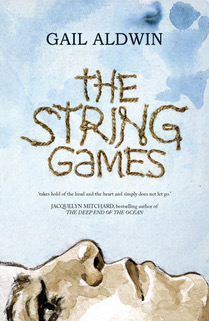
And The String Games can be pre-ordered here, from Victorina Press
Thursday, 14 March 2019
Guest Post on Sandra Danby's blog - Talking All Things Short Story
I'm over on Sandra Danby's blog today, talking all things short story. Here's an excerpt:
A warm Yorkshire welcome today to my blog to short story writer Amanda Huggins, a 2018 Costa Short Story Award runner-up, who has clear ideas about writing the short form. Welcome Amanda!  “There’s been talk in recent years of a short story renaissance. In January 2018 The Bookseller magazine reported that sales of short story collections were up 50%, reaching their highest level in seven years. However, this turned out to be largely due to a single book — Uncommon Type by Tom Hanks. This January the news was all about poetry — sales were up 12% in 2018, for the second year in a row.
“There’s been talk in recent years of a short story renaissance. In January 2018 The Bookseller magazine reported that sales of short story collections were up 50%, reaching their highest level in seven years. However, this turned out to be largely due to a single book — Uncommon Type by Tom Hanks. This January the news was all about poetry — sales were up 12% in 2018, for the second year in a row.
“It’s great to see a renewed interest in both forms — certainly a couple of independent bookshops I’ve talked to this week have confirmed that short story sales are up — and more collections are being featured in review columns. There was also the buzz around Kristen Roupenian’s short story, ‘Cat Person’, published in the New Yorker at the end of 2017, which really resonated with a younger audience. Whatever you thought of that story, it was all good publicity for the short form.”

Four books on Amanda’s ‘To Read’ pile
“As a writer, I know that crafting a two thousand word story requires a different set of skills to novel writing, and the former should never be seen as practice for the latter — a short story isn’t a miniature novel any more than a novel is a protracted short story. Although short fiction is suited to the pace and attention span of the modern world, some readers say they don’t read shorts because they can’t lose themselves in the story the way they can in a novel. It is true that they demand your fine-tuned focus, they seek to be read straight through, and every sentence weighs in heavy because it has to earn its place. Yet all these things bring their own rewards. A cracking story will repay your time and attention by leaving you with something to think about for days after you’ve read it.
“When I’ve finished reading a novel I often pass it on, however I usually keep short story collections and return to them over the years in the same way that I do with poetry. I have countless favourites, many by established authors, but also a growing number by emerging short story writers. The collections on my shelves include books by William Trevor, Tessa Hadley, Helen Simpson, Helen Dunmore, Raymond Carver, AL Kennedy, Wells Tower, Stuart Evers, Miranda July, Yoko Ogawa, KJ Orr, Ernest Hemingway, Taeko Kono, Haruki Murakami, Richard Ford, Alice Munro, Flannery O’Connor, Anton Chekhov, Nikolai Gogol, Annie Proulx, Isaac Babel, Angela Readman, and AM Homes.”
If you'd like to read the full post, you can find it HERE

Wednesday, 13 March 2019
The Book Stewards Blog
I'm over on The Book Stewards blog today, talking to Teika Bellamy about writing and submitting short stories. Here's an excerpt:-
Q&A with short story writer Amanda Huggins
By Teika
As I was recently emailed a request for advice about the short story submission process and how to decide which path to take to publication, I thought it would be great to hear from some of the most talented short story writers I know. The multiple prize-winning writer Amanda Huggins was kind enough to take part in this Q&A and I am very grateful to her for sharing her knowledge. (You can read her powerful story ‘Red’ – which was a runner-up in the 2018 Costa Short Story Award here.)

1. What kind of short stories do you write and how long have you been writing in that genre and form?
I started writing short stories around 2011, mainly contemporary literary fiction, dealing with relationships and the human condition. Each story is as long as it needs to be, which means that most end up being between 1500-2500 words. However, I also write a lot of flash fiction under 500 words.
2. What’s your writing process (from idea to polished and ready-to-submit piece)? How long does this take on average?
Some stories tumble out of my head fully-formed, and some have to be dragged out! I’m not much of a planner, so as soon as an idea appears then I tend to throw it straight down. Having said that, I am a very slow writer. I’m never happy with what I’ve written, even after it’s been published, and despite editing as I go, I still revise and revise and revise. I can tweak for England, and I work on most of my longer stories for weeks. My collection, Separated From the Sea, was really the result of five years’ work. In my defence, I did have a lot of family commitments in that period, and I do have a full-time day job in engineering!
3. How do you go about finding the right publishing home for a story?
I’m glad you posed the question that way round, and didn’t ask how I go about writing a story to suit a publisher/competition. Because the truth is, I never do. I always write what I want to write and then look for the right competition or publication for the story. I’ve been entering competitions since I started writing, and I always read previous winning stories and check out the judges. However, as we all know, it’s a very subjective thing, and sometimes you just have to wing it. With literary journals you should always read a copy first to see if your work would be a good fit. Publishers advise this all the time, yet writers still don’t realise how important it is.
If you'd lke to read the rest of the interview, you can find it HERE
Subscribe to:
Posts (Atom)
BOOK REVIEW - The Wine-Dark Sea by Victoria Hislop
WHAT THE PUBLISHER SAYS: Beloved, bestselling author Victoria Hislop explores the turbulence of the post-war era in Greece in this unfor...

-
 I'm thrilled to welcome Allison Symes to Troutie McFish Tales today, to tell us more about her love of writing and to pass on some...
 -
So excited to be the runner-up in this year's competition! Announcing our 2016 Short Story W...
